Wondering whether a golf course renovation helps home values or just creates short-term noise? If you own, plan to buy, or may sell in The Bridgewater Club, that is a fair question. The good news is that the broader research points to a simple theme: visible reinvestment and long-term quality tend to support value better than stagnation does. Let’s look at what is changing, what the data says, and what it could mean for you in Bridgewater.
What is changing at The Bridgewater Club
The Bridgewater Club is one of Carmel’s best-known private golf communities, set on 725 acres with wooded surroundings, trails, lakes, ponds, and a large amenity base. According to The Bridgewater Club community overview, the neighborhood experience extends beyond golf and includes a broad club lifestyle that many buyers value.
That bigger-picture setting matters. In many golf communities, value is tied not just to the course itself, but to the full lifestyle package, including recreation, dining, fitness, and the overall look and feel of the neighborhood.
Bridgewater has already seen major reinvestment in its clubhouse and club facilities. As reported by Current, the clubhouse renovation began in late 2019 or early 2020 and wrapped up in late 2020, bringing updates such as the Zinc Bar and refreshed dining and gathering spaces.
That renovation was extensive. The same reporting notes improvements to areas including the boardroom, ballroom, golf shop, fitness center, exterior spaces, locker rooms, outdoor gathering areas, and rooftops. On the amenities side, The Bridgewater Club membership page highlights a 70,000-square-foot clubhouse, a 15,000-square-foot fitness center, indoor and outdoor pools, six tennis courts, and six pickleball courts.
There is also a secondary-market report that the Pete Dye-designed championship course is undergoing a full redesign and is scheduled to reopen in 2026. Because that timing is not confirmed on the club’s official site, it is best viewed as unconfirmed market context, not primary documentation. Still, even without relying on a specific completion date, the broader value discussion around reinvestment is relevant.
Why golf communities often command a premium
Golf-course homes have long carried a value premium in many markets, but the premium is not automatic. The National Golf Foundation says homes on golf courses have experienced an average 15% bump in property value. That is a useful benchmark, especially for communities where the course is central to the identity and layout.
At the same time, not every golf community performs the same way. A review published in the Journal of Park and Recreation Administration found that premiums can vary widely based on frontage, views, lot type, and course quality. In other words, the market usually rewards the best-positioned homes more than it rewards every home equally.
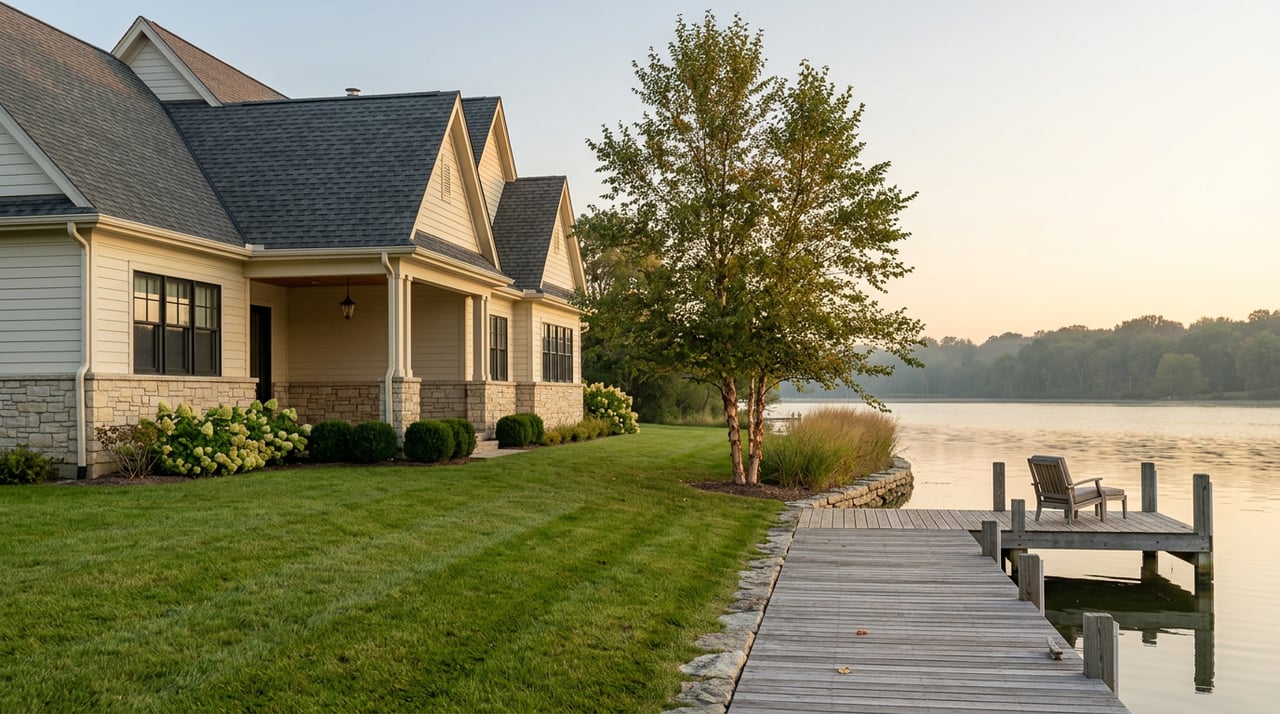
That is especially important in a neighborhood like Bridgewater, where the visual setting is part of the appeal. Homes with attractive views, strong privacy, and a polished community backdrop may benefit more than homes with less ideal positioning.
How renovations can affect home values
When a golf community reinvests, buyers often read that as a sign of stewardship and long-term stability. That perception can matter just as much as the physical improvements themselves. A well-maintained, current-looking club can strengthen buyer confidence in the community.
Research from John Burns Research and Consulting supports that idea. It found that homes next to closed or for-sale golf courses lagged metro-area appreciation by 18%, while homes next to redeveloped golf courses later appreciated 27% faster than the metro average once new development began.
The practical takeaway is clear: condition and confidence matter. A course or club that appears neglected can weaken value, while visible reinvestment can help restore or strengthen a neighborhood’s market position.
That does not mean every renovation causes an immediate jump in sale prices. In many cases, the biggest payoff shows up over time as the community feels more current, better maintained, and more desirable to future buyers.
What makes the Bridgewater story different
Bridgewater already has many of the ingredients that tend to support value in golf communities. It is a private club setting with substantial amenities, a strong visual environment, and a documented pattern of reinvestment.
That last point matters. Buyers tend to respond well when they see a community continuing to improve rather than simply maintaining the status quo. The clubhouse updates are already a positive signal because they show attention to the member and resident experience on and off the course.
Bridgewater also has appeal beyond golf alone. The club’s community page emphasizes the wooded acreage, trails, lakes, and ponds, which broadens the value story to lifestyle, setting, and neighborhood atmosphere.
That wider appeal is helpful in luxury markets. Many buyers are drawn to golf communities for the open space, views, privacy, and club environment, even if golf is not their main priority.
What sellers should keep in mind
If you are thinking about selling in The Bridgewater Club, the renovation story can be useful, but it should be framed carefully. Buyers tend to respond best to a message about quality, continuity, and long-term community investment, not just construction activity.
Your home may be especially well-positioned if it offers one or more of these features:
- attractive golf, water, or open-space views
- strong privacy from neighboring homes or paths
- a location with minimal traffic or activity impact
- updated finishes that match the community’s polished feel
- easy access to club amenities
The research suggests that lot placement still matters. The JPRA review found that premiums are strongest where views and integration with the course are most appealing, while other locations may see a smaller effect.
It is also worth remembering that temporary construction conditions and long-term value are not the same thing. During a renovation period, some buyers may focus on short-term inconvenience. After completion, the market often shifts attention back to the finished product and the overall strength of the community.
What buyers should watch closely
If you are considering buying in Bridgewater, look beyond the headline that a course is being renovated. The better question is whether the community will feel stronger, more polished, and more future-ready once the work is complete.
As you compare homes, focus on factors that tend to matter most over time:
- the quality of the view from the home
- privacy from golfers, paths, and activity areas
- how the lot relates to fairways, greens, or open space
- the strength of the broader amenity package
- signs of ongoing investment across the community
Design details can affect value in both directions. One appraisal study, summarized by The Free Library, found that proximity to a cart path reduced prices by 5.1% in the sample, with larger discounts near tees and greens. That does not mean every similar lot will underperform, but it does show why exact lot position matters in golf communities.
For buyers, this creates opportunity. A well-located home in a community with visible reinvestment may offer stronger long-term upside than a home with weaker privacy or a less favorable course relationship.
The most likely impact on Bridgewater values
Based on the available research, the most likely benefit for Bridgewater is not an automatic short-term price spike. It is reinforced long-term desirability.
That distinction is important. Communities with strong amenities, attractive settings, and consistent reinvestment often protect their reputation better over time. In luxury neighborhoods, reputation and buyer confidence are major drivers of demand.
The National Golf Foundation notes that golf real estate remains active, with many current golf projects tied to housing. That supports the idea that golf-centered communities still hold meaningful market appeal, especially when the club experience stays current.
For Bridgewater, the value-supporting case is straightforward:
- the community already has a substantial amenity base
- the setting is visually appealing and lifestyle-oriented
- major clubhouse improvements are already complete
- continued reinvestment tends to signal stability and stewardship
Taken together, those factors suggest that successful course improvements would be more likely to support Bridgewater’s market position than weaken it.
Bottom line for Bridgewater homeowners
If you own in The Bridgewater Club, the renovation story is best viewed as a long-term positive, assuming the finished result enhances course quality and the overall community experience. If you are buying, this is a reminder to study the exact lot, view, privacy, and amenity access instead of relying on the golf label alone.
In a luxury golf community, value is rarely about one feature in isolation. It comes from the full package: setting, upkeep, amenities, identity, and buyer confidence in where the neighborhood is headed.
If you want help evaluating how your specific Bridgewater property fits into that picture, or you want to understand which lots and homes may be positioned best as the community evolves, Mike Deck can help you make a smart, well-informed move.
FAQs
How can a golf course renovation affect Bridgewater home values?
- A well-executed renovation can support long-term value by improving buyer perception, community quality, and confidence in the neighborhood’s future.
Do all homes in The Bridgewater Club benefit equally from course improvements?
- No. Research shows value effects often vary based on view, lot placement, privacy, and how a home relates to the course.
Are short-term construction impacts the same as long-term value changes in Bridgewater?
- No. Temporary inconvenience during construction does not necessarily reflect the long-term market effect after improvements are complete.
What features matter most when buying a home in The Bridgewater Club?
- Buyers should focus on the specific lot, views, privacy, proximity to activity areas, and the strength of the overall amenity package.
Why do amenities beyond golf matter in Bridgewater real estate?
- Broader amenities like dining, fitness, pools, tennis, pickleball, trails, and water features can widen buyer appeal and strengthen the community’s lifestyle value.